Data Center Projects Reshape Local Races Across Six Kentucky Counties
Voters face a choice between incumbents who approved hyperscale developments and challengers promising to halt or regulate them.
By Noor Graham ·
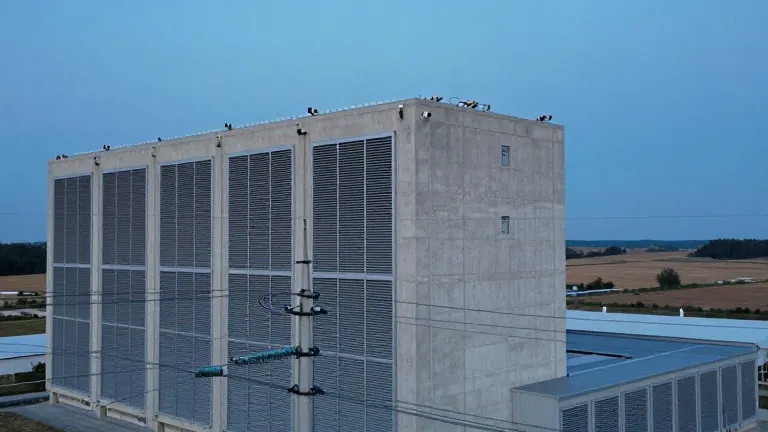
Kentucky Industrial Alliance, Inc. filed an application in May to build a data center in Cave City that would draw up to 1.2 gigawatts of power. That single proposal is the centerpiece of a larger trend across the state, where nearly 20 counties have seen new hyperscale data center announcements over the past year. These facilities require massive amounts of energy to support artificial intelligence services, and local officials in six counties are now facing election challenges directly tied to their decisions on these projects.
The issue has moved from zoning boards to the ballot. In the May primaries, voters in some localities already punished incumbents for supporting unpopular projects from 2025. One opposition leader in Oldham County won the Republican nomination for judge-executive, while data center supporters defeated challengers in that county and in Simpson County. With Election Day approaching, candidates in several districts are framing their campaigns around whether elected officials handled these developments correctly.
In Cave City, Mayor Dwayne Hatcher faces a direct challenge from Councilman Clifton Parsley. Hatcher opposed a one-year moratorium on new data centers, which the city council passed by a 4-1 vote. The council cited concerns about building on karst land near Mammoth Cave National Park. The developer sued the city over the ordinance, and that litigation remains pending. Parsley, who voted for the moratorium, is running for mayor. Four other council members who supported the ban are seeking reelection, while the only member who voted against it, Denny Doyle, is also on the ballot.
Money has entered the Cave City race through a new entity called Community Growth Action LLC. The group reported spending $1,637 on mailed print ads supporting Hatcher. The company is not registered with the Kentucky Registry of Election Finance or the Secretary of State’s office. It lists a Louisville address, and an automated voice on its phone line said the group supports candidates whose records align with its priorities. A page on its website that was later removed also referenced the mayoral race in Burgin, a city with its own controversial data center proposal.
In Burgin, a developer named Panattoni wants to build a hyperscale facility on land that the city council voted to annex in July. This move would exempt the project from local regulations. Interim Mayor Joe Monroe has since blocked the annexation ordinance. Hensley, the only candidate for mayor on the ballot, voted for the annexation. Monroe has filed to be an eligible write-in candidate. The city council race includes two members who voted to block annexation, one who voted for it, and a local activist organizing against the project.
The Mercer County Fiscal Court race pits incumbent Judge-Executive Sarah Steele against Democratic challenger Chris Walker. Steele supported a one-year moratorium on new data centers, a measure that would not apply to Burgin if the land is annexed. She was criticized for signing a non-disclosure agreement with an unnamed developer last year. Walker is an active activist against the proposals. In the state House race, Republican Representative Kim King is favored but facing increased spending from political action committees. The Kentucky Chamber of Commerce spent $12,500 on positive ads for King, while Commonwealth Conservative Coalition PAC spent nearly $75,000 on negative ads against her opponent, Katrina Sexton.
In Jefferson and Oldham counties, Democratic challengers are attacking Republican incumbents over their votes for a 2025 bill. That law grants data center companies a 50-year exemption from sales and use tax on computer equipment. The bill is estimated to relieve companies of $1 billion to $2 billion in tax burdens if just four facilities are built. Representative Jason Nemes defended his vote in a video ad, saying he does not support the "hysteria" of those who want to ban data centers but believes they do not belong in his district. Conservative PACs have spent more than $250,000 on ads for Representative Ken Fleming and $336,000 for Representative Susan Witten to defend their positions.
The issue also dominates the Louisville mayoral race. Incumbent Mayor Craig Greenberg supports a west end hyperscale project, while his opponent Shameka Parrish-Wright wants to ban such facilities in the city. Parrish-Wright has attempted to link Greenberg to Poe Companies, the developer of the project, which is owned by a former business partner of the mayor. Greenberg has raised $2.2 million for his campaign, while Parrish-Wright has raised less than $120,000.