Senate Stakes: 13 Battlegrounds and the Path to 51 Seats
Democrats need a net gain of four seats to reclaim the majority, a hurdle complicated by the party's financial disadvantage and redistricting efforts.
By Rebecca Svoboda ·
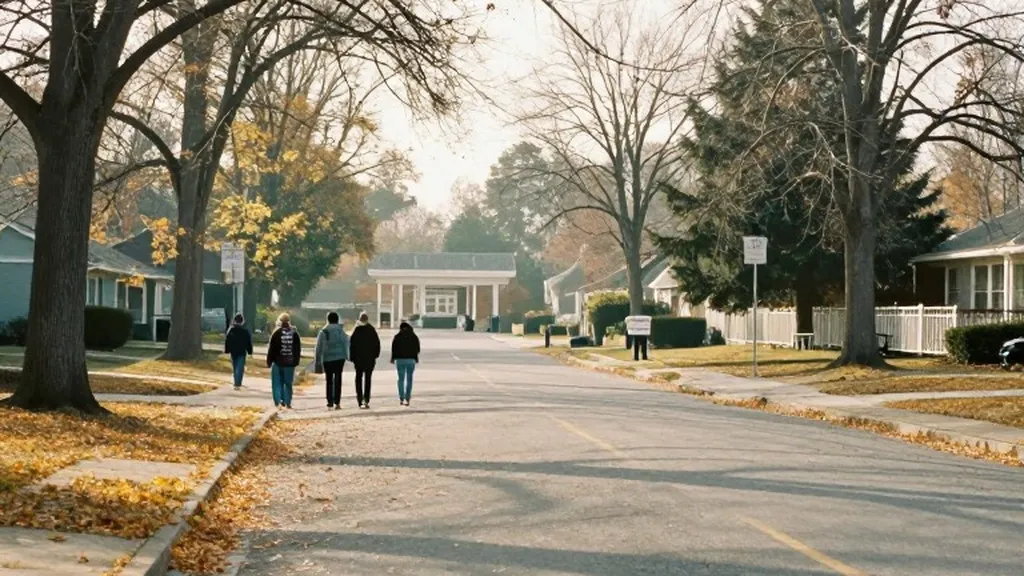
The United States is deciding the composition of the U.S. Senate today, with 35 seats up for election. This midterm contest occurs halfway through President Donald Trump's second term and will determine which party controls Congress for the final two years of his administration. Republicans currently hold 53 seats, while Democrats hold 45, with two independents who caucus with the Democrats. For Democrats to achieve a majority, they must secure a net gain of four seats. This is a high bar, as Republicans can afford to lose only two seats and still maintain their hold on the chamber.
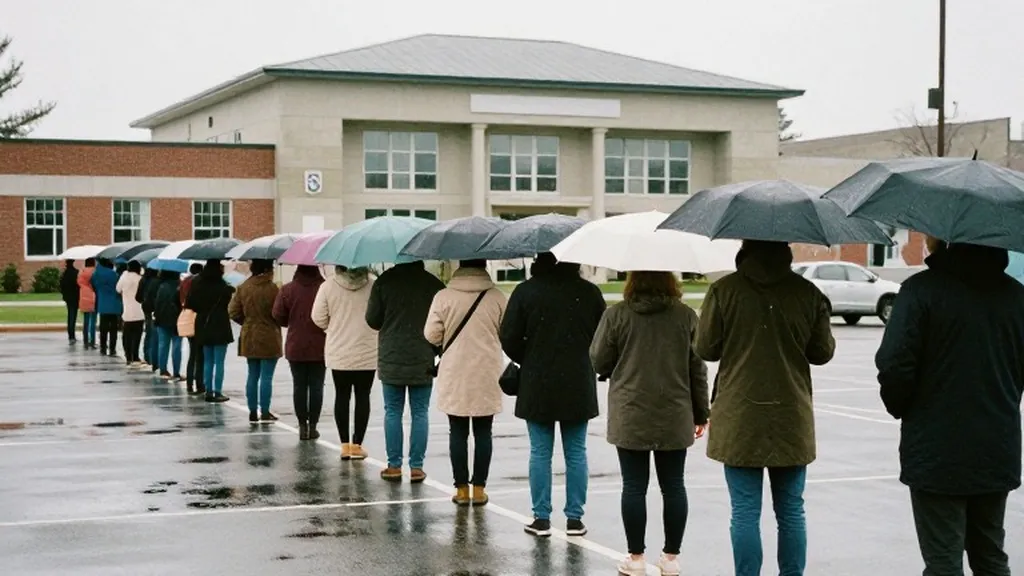
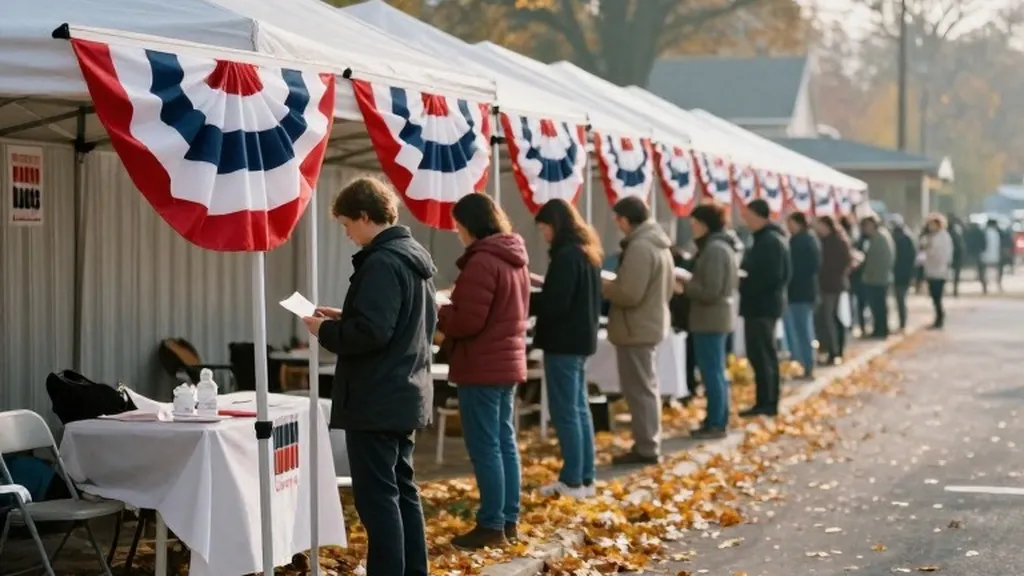
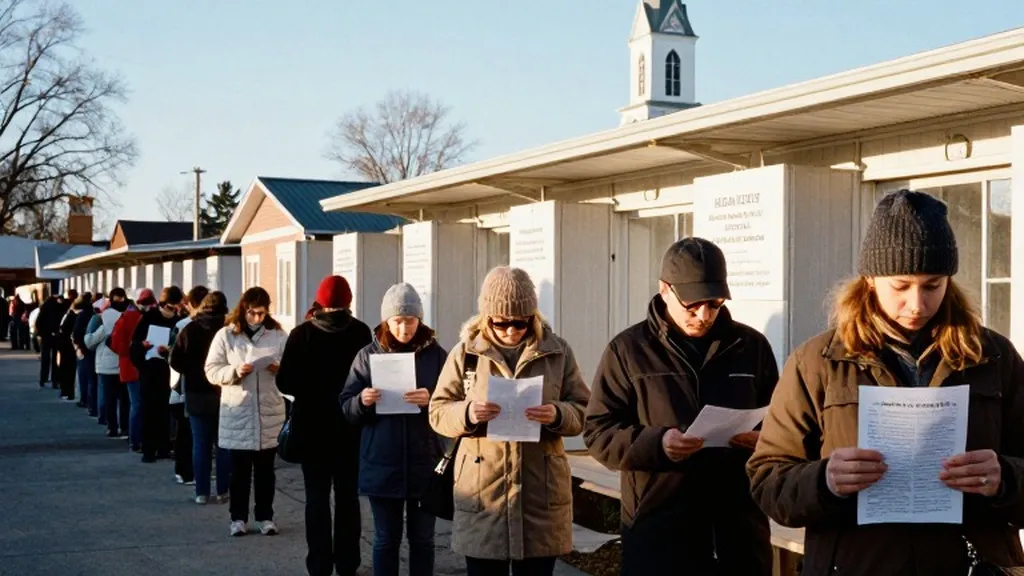
Thirteen Senate races are considered battlegrounds, according to Ballotpedia. These contests span a range of political leanings, from states that voted for President Trump in 2024 to those that supported Vice President Kamala Harris. In the Great Lakes and Ohio Valley region, voters are heading to the polls to decide three key Senate outcomes. In Michigan, polls are open from 7 a.m. to 8 p.m. for an open seat following the retirement of Gary Peters. In Kentucky, polls are open from 6 a.m. to 6 p.m. for an open seat. In West Virginia, polls are open from 6:30 a.m. to 7:30 p.m. to decide if incumbent Shelley Moore Capito will retain her seat. Ohio also has a special election for the remainder of JD Vance's term, with polls open from 6:30 a.m. to 7:30 p.m.
Ratings for these races, as of October 27, show a mix of uncertainty. Maine is rated a toss-up by all four major trackers, including Cook Political Report and Decision Desk. Iowa is rated a toss-up or tilting Republican. Kansas is rated a toss-up or leaning Republican. Alaska is rated a toss-up or leaning Democratic. Michigan is rated a toss-up or leaning Democratic. Georgia is rated leaning or likely Democratic. These ratings reflect the tightness of the contests and the importance of turnout in determining the final count.
Financial dynamics are playing a significant role in the race. The 2026 elections are expected to be the most expensive in history. Republican committees have outraised and outspent Democratic committees at the committee level, aided by Trump-affiliated groups and Elon Musk. However, at the candidate level, Democrats have outraised their opponents. An analysis of AdImpact data by the Associated Press found that 88.1% of Republican general election TV ad spending went to states and districts Trump won in 2024. This includes more than $850 million in spending in areas where he won by 10 points or more. This concentration of resources poses a challenge for Democrats in holding their seats and flipping Republican-held ones.
Redistricting has also altered the landscape. Six states are using new congressional maps, and Ohio is using a new map for its Senate special election. Republicans sought to beat the traditional midterm pattern, where a president's party almost always loses seats, by utilizing redistricting. However, new districts in states like Florida may not vote as they were drawn. This strategic shift adds another layer of complexity to the Senate race, as parties try to maximize their advantages in newly defined districts.
In the Senate battlegrounds, several key matchups have drawn national attention. In North Carolina, former Democratic Governor Roy Cooper faces former Republican National Committee chair Michael Whatley. In Georgia, Senator Jon Ossoff is running against Republican Representative Mike Collins. In Ohio, former Democratic Senator Sherrod Brown is challenging Republican Senator Jon Husted. In Michigan, former Republican Representative Mike Rogers is running against Democrat Abdul El-Sayed. In Texas, Republican Attorney General Ken Paxton is facing Democrat James Talarico. In Maine, Senator Susan Collins is running against former Democratic State Senate President Troy Jackson. In New Hampshire, Democratic Representative Chris Pappas is challenging former Republican Senator John E. Sununu. In Minnesota, Democratic Lieutenant Governor Peggy Flanagan and Republican Michele Tafoya are among four candidates for the seat of retiring Senator Tina Smith. In Kansas, the race has become central to the fight for Senate control despite the state's reliable Republican leanings. In Alaska, the Trump administration has filed a lawsuit related to the certification of the Senate result.
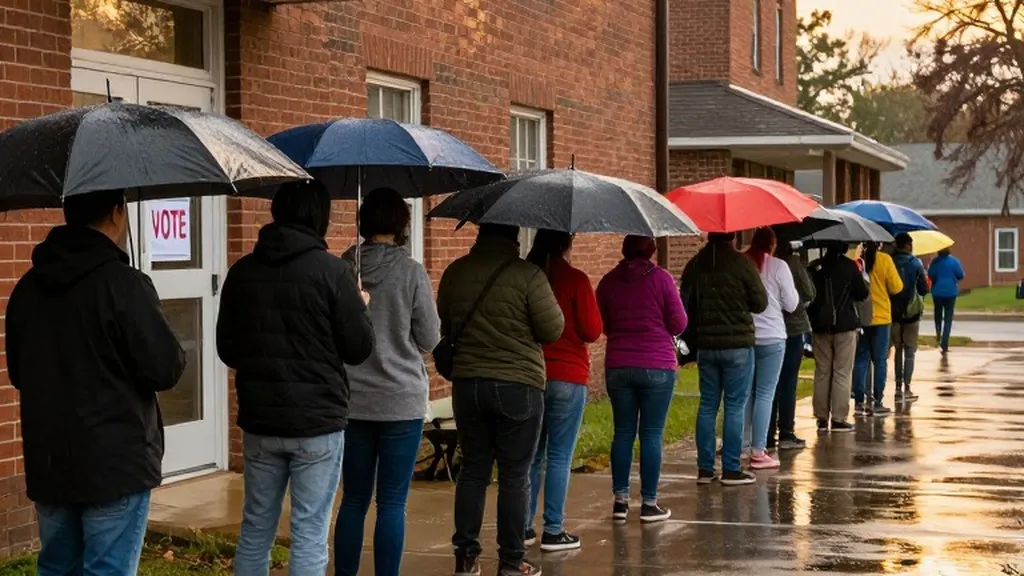
The mood among voters is shaped by the cost of living and an unpopular war with Iran. The Associated Press describes the election as a referendum on Trump's second term. AP-NORC polling shows that 35% of U.S. adults approve of Trump's job performance, and 25% approve of his handling of the economy. About 7 in 10 voters say the country is heading in the wrong direction, with most blaming high prices. More than 57 million people had already voted as of Monday, surpassing the early vote totals of four years ago in many closely watched states. This high level of early participation suggests that turnout will be a critical factor in the final outcome.
Democrats are described as cautiously optimistic, while Republicans are bracing to lose the House and fighting to hold the Senate. The Associated Press notes that one or two seats could tip either chamber. If Democrats win even one chamber, investigations and possible impeachment proceedings become likely. House Democratic Leader Hakeem Jeffries, who would be the first Black speaker if Democrats take the House, has outlined a 100-day agenda focusing on the cost of living and oversight. A strong Democratic night would also boost potential 2028 candidates such as Gavin Newsom, JB Pritzker, and Pete Buttigieg, and could complicate Vice President JD Vance's path.
Voters in the Great Lakes and Ohio Valley are casting their ballots today with these stakes in mind. In Michigan, the open Senate seat is a key target for Democrats, who see a chance to flip the state from Republican to Democratic control. In Kentucky, the open seat is another opportunity, though the state voted for Trump by a wide margin in 2024. In West Virginia, voters are deciding whether to keep Shelley Moore Capito in her seat. In Ohio, the special election for Vance's term is being watched closely, as it could influence the overall balance of power in the Senate.