Trump's Midterm Push: Rallies, Distance, and Approval Numbers
As polls open in key Great Lakes states, the president's low approval ratings and active campaigning are reshaping the dynamics of the 2026 midterm elections.
By Sakura Ellis ·
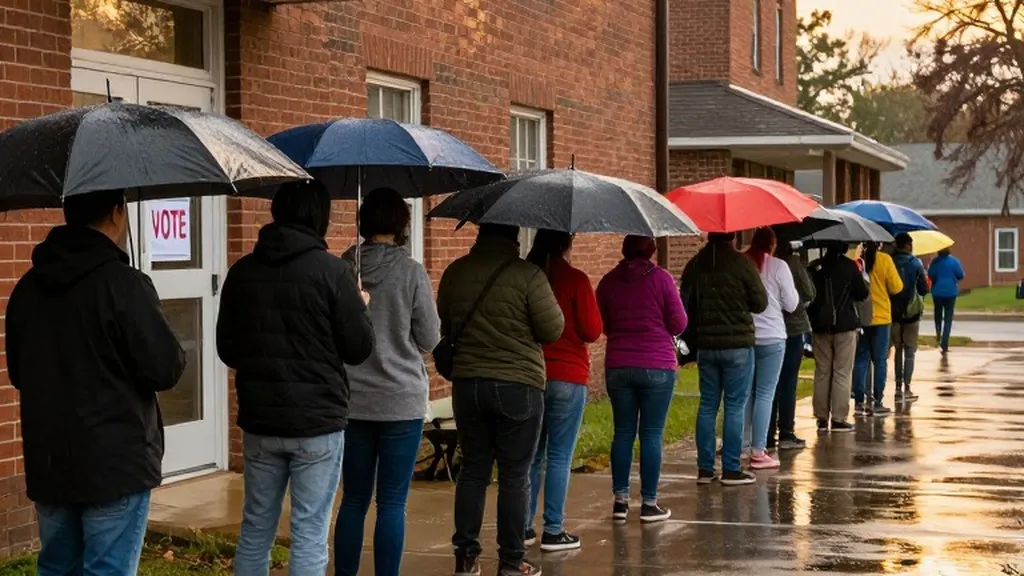
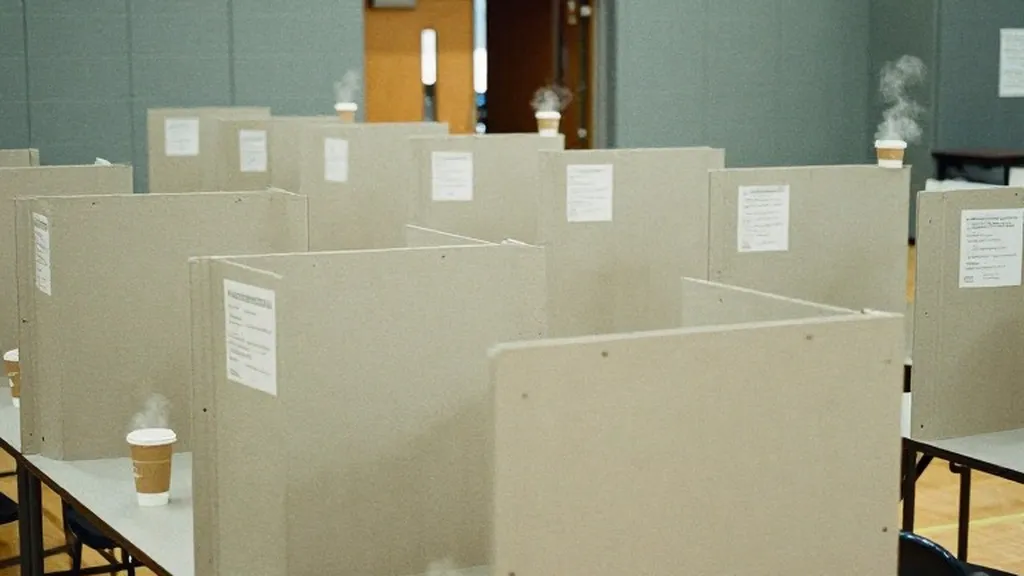
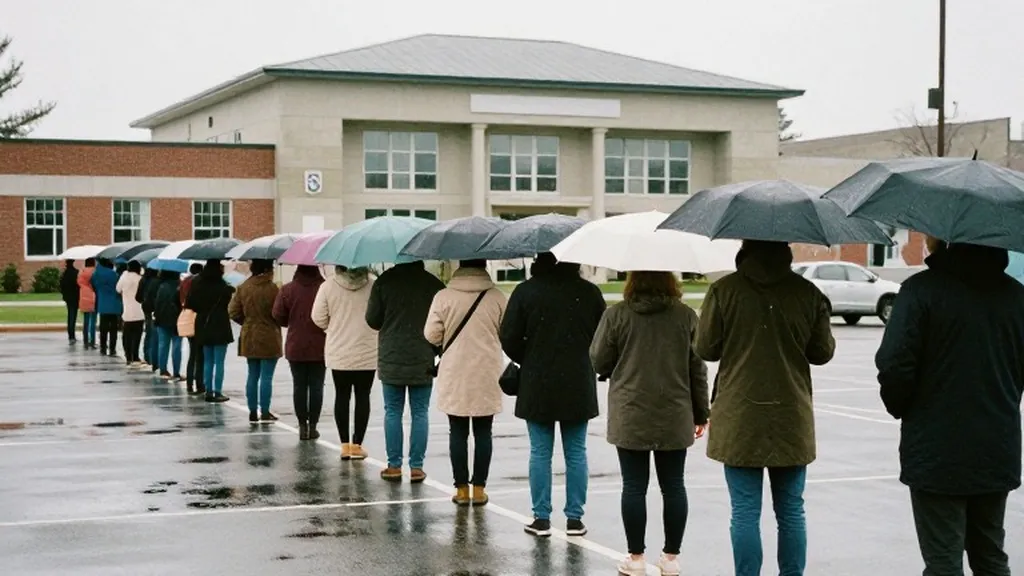
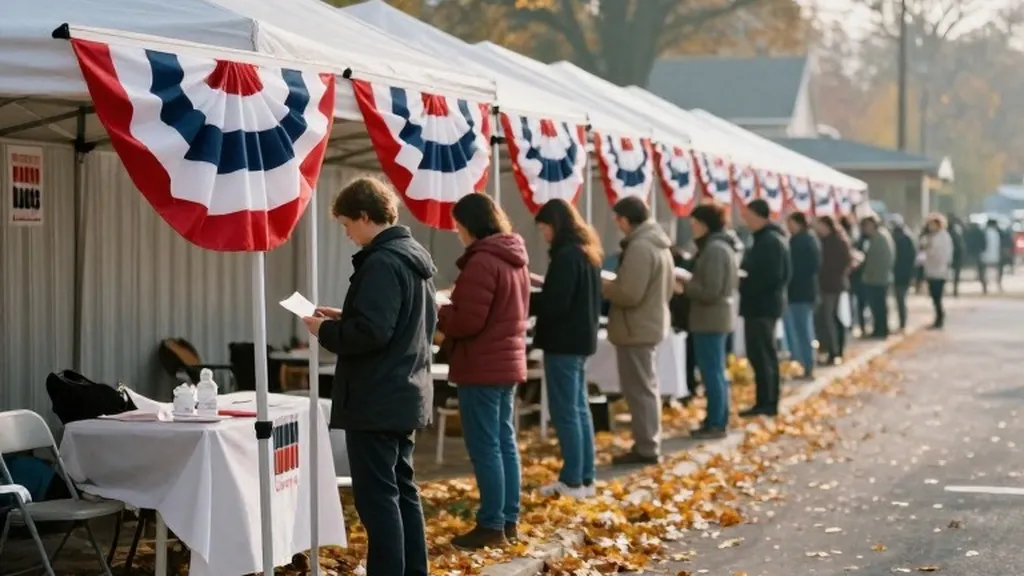
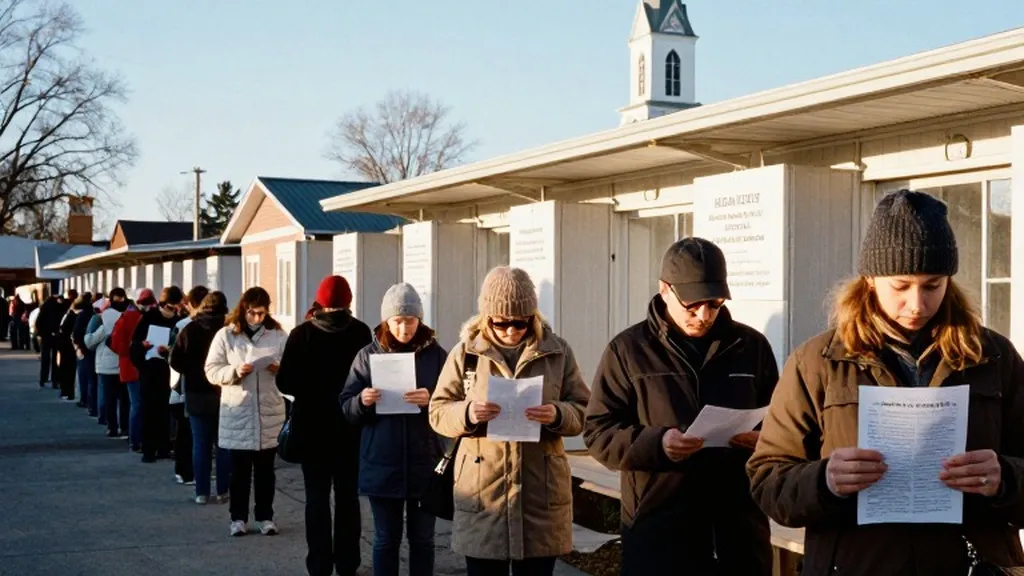
Voters across the Great Lakes and Ohio Valley are casting ballots on a Tuesday that defines the second half of President Donald Trump's term. In Michigan, polls are open from 7 a.m. to 8 p.m., while in Ohio and West Virginia, voting runs from 6:30 a.m. to 7:30 p.m. Kentucky residents have until 6 p.m. to cast their votes. These states are central to the national fight for control of Congress, with open seats in the Senate in Michigan and Kentucky and a decisive governor's race in Ohio.
The Associated Press describes the election as a direct referendum on the president's second term. According to AP-NORC polling, only 35% of U.S. adults approve of Trump's job performance, a figure that has complicated his campaign strategy. His handling of the economy has even lower support, with just 25% approval. About seven in ten Americans say the country is heading in the wrong direction, and most blame the president for high prices. These numbers have forced Republican candidates to navigate a delicate balance between the president's influence and the mood of the electorate.
Trump has held dozens of rallies to boost turnout, concluding his recent tour in Salina, Kansas, where he told supporters, "I really want you to pretend I'm on the ballot." His schedule included stops in Mississippi, South Carolina, and Texas. Despite his active presence, many Republican candidates have kept their distance from the president to avoid dragging his approval ratings into their own races. This strategy reflects a broader concern among party leaders that the president's popularity could be a liability in tight districts and states.
In the Ohio Valley, the stakes are particularly high. Ohio is deciding a special Senate seat currently held by Republican Jon Husted, who is facing a challenge from former Democratic Senator Sherrod Brown. The state also has an open governor's seat, with Republican Vivek Ramaswamy competing against Democrat Amy Acton. Ramaswamy's campaign faced recent backlash over an advertisement featuring Acton's estranged mother, highlighting the intense scrutiny facing candidates in this battleground. The AP notes that one or two Senate seats could determine which party controls the chamber, making Ohio a critical target for both sides.
Michigan presents a similar challenge for Republicans. The state has an open Senate seat following the retirement of Gary Peters, and the race is rated as a toss-up to lean Democratic. Republican former Representative Mike Rogers is competing against Democrat Abdul El-Sayed. The race took a turn on Sunday when El-Sayed's former primary opponent, Haley Stevens, endorsed Rogers. This endorsement underscores the crowded and competitive nature of the field, where voters are weighing economic strain and tariff impacts against party loyalty. The AP says economic concerns have made Michigan a competitive environment for both chambers.
The cost of living is the primary issue for voters in these states. James Moore, a 57-year-old librarian in Raleigh, North Carolina, told the AP, "I'm paying more taxes. I'm paying more for my healthcare. I'm paying more for everything." His sentiments are shared by many in the region, where inflation has eroded trust in the administration. Democrats are leveraging these complaints to argue for change, while Republicans are fighting to hold their seats despite the economic headwinds. The AP notes that Democrats are cautiously optimistic, while Republicans are bracing for the possibility of losing the House.
Trump has continued to make false claims about voting fraud, including assertions that noncitizens vote in large numbers. His administration has filed lawsuits in Alaska and California related to election certification and ballot handling. A federal judge temporarily barred the administration from carrying out a plan to prevent noncitizen voting, citing risks to eligible voters. Democrats fear that these legal actions and the threat of prosecuting local election officials could intimidate voters or interfere with the counting process. These concerns are particularly acute in states with close margins, where every ballot may matter.
The financial disparity between the parties is another factor shaping the election. The 2026 elections are likely to be the most expensive in history. Republican committees have outraised and outspent Democratic committees, aided by Trump-affiliated groups and Elon Musk. However, at the candidate level, Democrats have outraised their opponents. The AP analysis of AdImpact data shows that 88.1% of Republican general election TV ad spending went to states and districts Trump won in 2024. This spending strategy suggests that Republicans are focusing their resources on defending their base rather than competing in swing districts where Democrats may have an advantage.
In West Virginia, voters are deciding the fate of incumbent Republican Senator Shelley Moore Capito. The state has no governor's race on the ballot, but the Senate seat is a key part of the national count. Republicans need to lose no more than two Senate seats to maintain their majority, while Democrats need a net gain of four. The combination of economic anxiety and the president's low approval ratings makes this race, along with others in the region, a bellwether for the final result. The USPS has added hours and staff to ensure mail ballots are counted on time, adding to the logistical efforts to manage a high-turnout election.
As polls close in the evening, the focus shifts to the counting of ballots and the potential for legal challenges. The outcome of this election will determine who controls Congress for the president's final two years. If Democrats win either chamber, investigations and oversight of the administration are likely to increase. House Democratic Leader Hakeem Jeffries has outlined a 100-day agenda focused on the cost of living and oversight, signaling a shift in legislative priorities if his party gains power. The results of today's vote will set the tone for the political landscape heading into the 2028 presidential cycle.