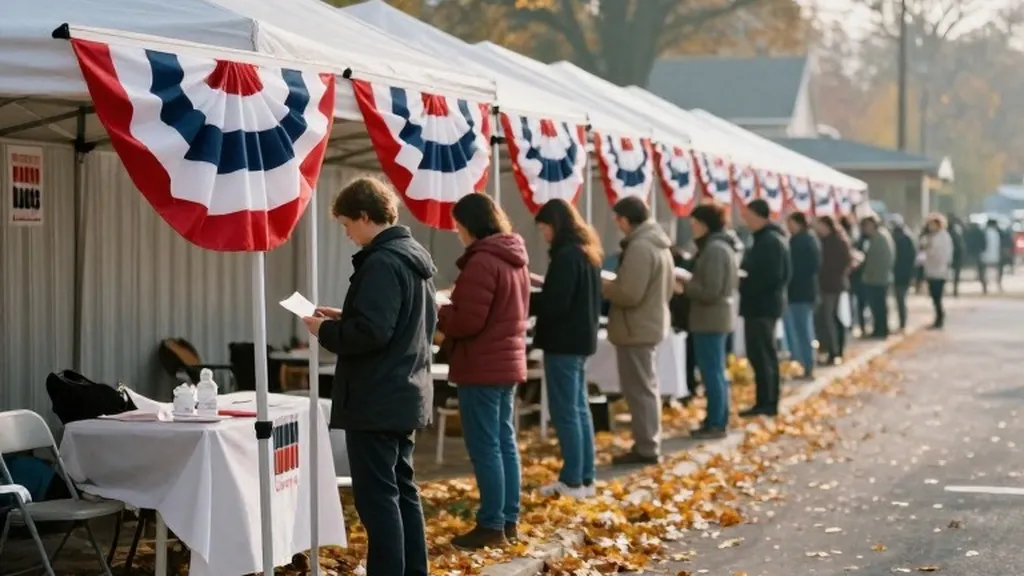
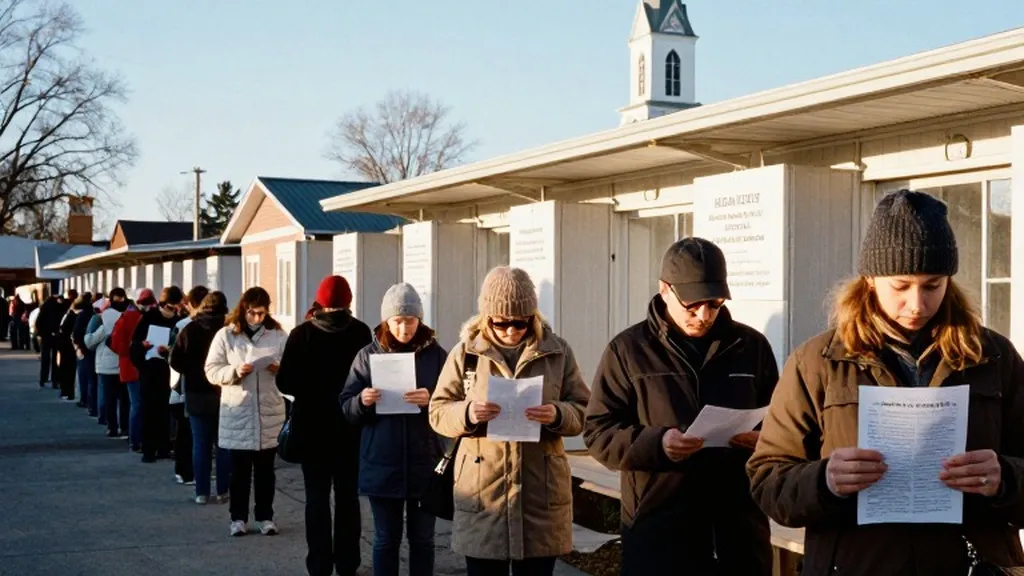
Democrats aim to control majority of governor's offices in Tuesday's elections
Thirty-six states will vote for governors on Tuesday, with Democrats seeking to end a 20-year Republican hold on the majority of executive suites.
By Noor Graham ·
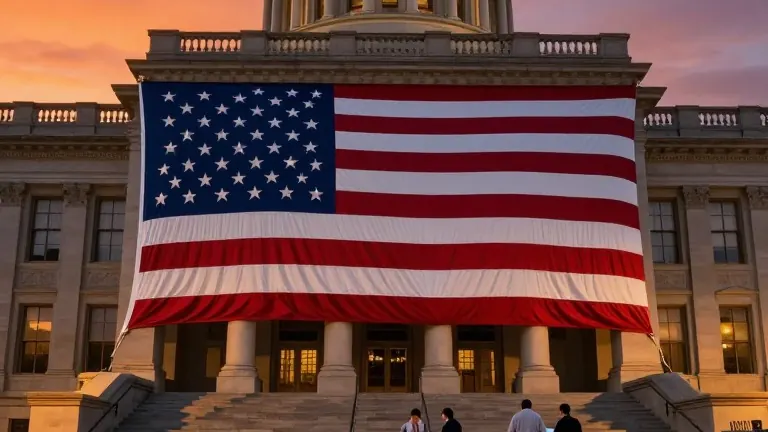
Democrats seek a majority of the nation's governorships on Tuesday, a milestone they have not reached since 2006. The party is capitalizing on voter dissatisfaction with the economy, inflation, and healthcare to challenge Republican incumbents. Republicans currently hold 26 of the 50 governorships, while Democrats control offices representing 60% of the U.S. population. Meghan Meehan-Draper, executive director of the Democratic Governors Association, told The Associated Press that the party's objective is to secure the majority of states, not just the population.
Thirty-six states, home to approximately 80% of the country's residents, will elect a governor. Nineteen of these offices are open because the sitting governor cannot run again. The number of competitive races is high due to President Donald Trump's low approval ratings, which have weighed on his party's candidates. Trump held rallies in heavily Republican districts over the past weeks to support GOP gubernatorial candidates. His administration has also clashed with Democratic-led states over National Guard deployments, immigration enforcement, and federal election standards.
Democrats view Alaska, Georgia, Iowa, and Ohio as their strongest opportunities to flip seats. In these states, the current governors are term-limited. Georgia and Alaska have not elected a Democratic governor since 1998, while Iowa and Ohio have not had one since 2006. In Nevada, state Attorney General Aaron Ford is challenging Republican Governor Joe Lombardo. Republicans have their best chance to gain an office in Kansas, where term-limited Democratic Governor Laura Kelly is not running. The GOP also targets Wisconsin, where Republican U.S. Rep. Tom Tiffany is running against Democrat David Crowley.
The race in Ohio drew national attention after a Republican ad featured the estranged mother of Democratic candidate Amy Acton criticizing her. The mother lost custody of the children decades ago after Acton's stepfather was indicted for rape. The ad received criticism from both parties, including from Ohio Governor Mike DeWine. President Trump and Vice President JD Vance, who is from Ohio, defended the spot. In Texas, Democratic state Rep. Gina Hinojosa is challenging third-term Republican Governor Greg Abbott. No Democrat has won statewide office in Texas since 1994. Hinojosa entered the general election with significantly less funding than Abbott but secured a close race, prompting the Democratic Governors Association to allocate $1 million in aid.
Abbott skipped a Trump rally in Texas, a move that signaled the president's declining popularity in the state. In Florida, the nation's third-most populous state, Republican U.S. Rep. Byron Donalds is running against Democrat David Jolly, a former Republican congressman. The six swing states from the 2024 presidential election, including Arizona, Georgia, Michigan, Nevada, Pennsylvania, and Wisconsin, are also deciding their executive leaders. These governors will have influence over election administration heading into the 2028 presidential cycle, an area where Trump has sought expanded federal control.
Several Democratic governors running for reelection are viewed as potential candidates for the 2028 presidential nomination. This group includes Governor Wes Moore of Maryland, Governor JB Pritzker of Illinois, and Governor Josh Shapiro of Pennsylvania. A strong showing for these candidates is expected to signal strength to donors and party activists. The election also presents a chance for historic firsts. In Texas, Hinojosa is running to become the first Latina governor. In New Mexico, Deb Haaland is seeking to become the first Native American woman to lead a state. Seven Black major party nominees for governor appear on ballots across the country, in addition to Moore. In the past 250 years, only three elected governors have been Black.
Source: The News-Herald